logo
Shenzhen Rion Technology Co., Ltd.
Products
Home /

Products

PDA826FL Dual-Axis Tilt Sensor for Bridge and Dam monitoring

Product Details

Place of Origin: China

Brand Name: RION

Certification: CE, ISO,ROHS

Model Number: PDA826FL

Payment & Shipping Terms

Minimum Order Quantity: 1

Price: $360pcs/Pieces

Packaging Details: packing carton

Delivery Time: 5~8 work days

Payment Terms: T/T

Supply Ability: 1000 pcs/month

Get Best Price
Contact Now
Specifications
Highlight:

Dual-Axis Tilt Sensor for bridges

,

Dam monitoring tilt sensor

,

Tilt inclinometer with dual-axis

Range:
±10°
Size:
L82×W70×H42mm
Protection Grade:
IP67
Output Mode:
TTL
Output Signal:
RS485/RS232/RS422 Optional
Anti-vibration:
10grms / 10~1000Hz
Measure Range:
±10
Resolution:
0.0005
Range:
±10°
Size:
L82×W70×H42mm
Protection Grade:
IP67
Output Mode:
TTL
Output Signal:
RS485/RS232/RS422 Optional
Anti-vibration:
10grms / 10~1000Hz
Measure Range:
±10
Resolution:
0.0005
Description
PDA826FL Dual-Axis Tilt Sensor for Bridge and Dam monitoring

APPLICATION FIELD

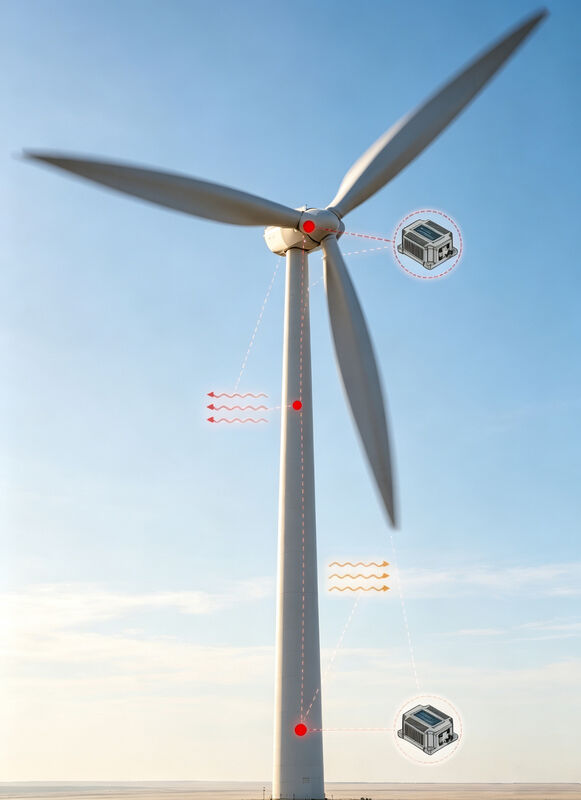
  • Wind power monitoring
  • Bridge and Dam monitoring
  • Ancient building monitoring
  • High-speed rail track monitoring
  • Ground satellite communication vehicles
  • Railway gauge ruler and gauge leveling
  • Satellite communication vehicl
  • Engineering vehicle leveling
  • Geological equipment tilt monitoring
PDA826FL Dual-Axis Tilt Sensor for Bridge and Dam monitoring

WORKING PRINCIPLE OF TILT ANGLE

Adopting imported core control unit and utilizing the principle of capacitive micro pendulum. Using the principle of Earth's gravity, when the tilt unit tilts, the Earth's gravity will produce a component of gravity on the corresponding pendulum, and the corresponding capacitance will change. By amplifying, filtering, and converting the capacitance, the tilt angle can be obtained.

INSTALLATION PRECAUTION

Please install the tilt sensor according to the correct method. Incorrect installation will cause measurement errors. Pay special attention to one "surface" and two "line":

  1. The sensor mounting surface and the surface to be measured must be fixed tightly, flat and stable, if installation surface is unevenness, it will cause the angle error.
  2. The axis of the sensor and the axis to be measured must be parallel, and there should be no angle between the two axes as possible.

MAIN FEATURES

  • Biaxial tilt angle measurement
  • Range ±10°
  • Horizontal/vertical optional
  • DC 9~36V wide voltage input
  • Resolution 0.0005°
  • IP67 protection grade
  • Size: L82*W70*H42mm
  • Output mode TTL
  • Wide temperature operation -40~+85℃

SPECIFICATIONS

PDA826FL Condition Parameters Unit
Measure range - ±10 °
Measure axis - XY axis
Resolution - 0.0005 °
Measure accuracy Room temp. 0.05 °
Zero temp coefficient -40~85℃ 0.0003 °/℃
Sensitivity temp. coefficient -40~85℃ ≤50 ppm/℃
Power on time
<0.5 S
Response frequency
20 Hz
Output rate 5Hz,10Hz,25Hz,35Hz,50Hz,100Hz Can be set
Ouput signal RS485/RS232/RS422 Optional
EMC According to EN61000 and GBT17626
MTBF ≥98000 hour/time
Insulation Resistance ≥100 MΩ
Shockproof 100g@11ms / 3 Axial Direction (Half Sinusoid)
Anti-vibration 10grms / 10~1000Hz
Protection grade IP67
Cables Standard 1 meter long wear-resistant, wide temperature, shielded cable, aviation connector, weight ≤150g
Weight ≤400g (Excluding cable)

Resolution: Refers to the sensor in measuring range to detect and identify the smallest changed value.

Measure accuracy: refers to the root mean square difference between the measured value and the actual angle of the product within the range and for multiple times (more than 16 times).

Zero Temperature Drift Coefficient: the change rate of the indication value relative to normal temperature within the rated operating temperature range of the sensor at the zero degree.

Sensitivity Temperature Drift Coefficient: The percentage change rate with temperature of the full-scale indication relative to the full-scale indication at room temperature of the sensor in its rated operating temperature range.

PDA826FL Dual-Axis Tilt Sensor for Bridge and Dam monitoring PDA826FL Dual-Axis Tilt Sensor for Bridge and Dam monitoring

FAQ: Dual-Axis Tilt Sensor — Frequently Asked Questions

Q1: What is the measurement range and accuracy of this tilt sensor?

A: The sensor offers a measurement range of ±10° with dual-axis capability and a high resolution of 0.0005°, making it ideal for precision tilt monitoring applications.

Q2: How does the sensor work?

A: The sensor is built with an imported core control unit and operates on the capacitive micro-pendulum principle. When the tilt unit tilts, gravity produces a force component on the pendulum, changing the internal capacitance. This signal is then amplified, filtered, and converted into a precise tilt angle reading.

Q3: What applications is this sensor suitable for?

A: Typical applications include:

  • Wind power turbine monitoring
  • Bridge and dam structural monitoring
  • Ancient/historical building monitoring
  • High-speed rail track monitoring
  • Ground satellite communication vehicles
  • Railway gauge rulers and gauge leveling
  • Engineering vehicle leveling
  • Geological equipment tilt monitoring

Q4: What is the required power supply?

A: The sensor accepts a wide DC input range of 9–36V, offering flexibility with various on-site power sources.

Q5: What output signal does the sensor provide?

A: The sensor outputs a TTL signal for easy integration with your data acquisition or control systems.

Q6: Can the sensor withstand harsh environments?

A: Yes. With an IP67 protection rating and an operating temperature range of –40°C to +85°C, the sensor delivers reliable performance in outdoor, high-humidity, dusty, and extreme temperature conditions.

Q7: What should I pay attention to during installation?

A: Incorrect installation can cause measurement errors. Please follow the "one surface, two axes" rule:

  • Surface: The sensor mounting surface must be tightly secured to the measurement surface — flat and stable. An uneven mounting surface will introduce angle errors.
  • Axes: The sensor axis must be parallel to the axis being measured, with no angle between the two axes whenever possible.

Q8: Can the sensor be installed both horizontally and vertically?

A: Yes. Both horizontal and vertical installation options are available, so you can choose the orientation that best fits your application.

Q9: What are the sensor's dimensions?

A: The compact housing measures L82 * W70 * H42 mm, making it easy to integrate into a wide range of equipment.

Ratings & Review

Overall Rating

5.0
Based on 50 reviews for this supplier

Rating Snapshot

The following is the distribution of all ratings
5 stars
100%
4 stars
0%
3 stars
0%
2 stars
0%
1 stars
0%

All Reviews

D
David Thompson, S
Canada Nov 14.2018
We have been using this inclinometer for a long period of time, and the measurements remain accurate and stable. No abnormalities have been observed during continuous operation, and the overall product quality has proven to be very reliable.
Send your inquiry
Please send us your request and we will reply to you as soon as possible.
Send