logo
Shenzhen Rion Technology Co., Ltd.
Products
Home /

Products

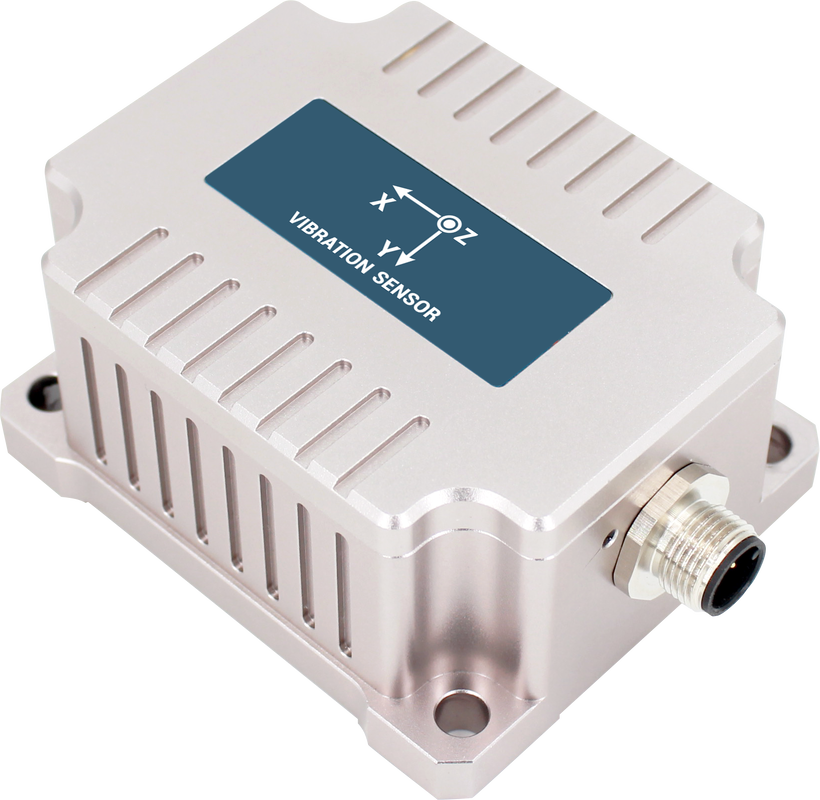
AKP342 VIBRATION SENSOR SPECIAL FOR FAN MONITORING

Product Details

Place of Origin: China

Brand Name: RION

Certification: CE, ISO,ROHS

Model Number: AKP342

Document: AKP342 Wind Turbine Dedicat...or.pdf

Payment & Shipping Terms

Minimum Order Quantity: 1

Price: $268.00/Pieces

Packaging Details: packing carton

Delivery Time: 5~8 work days

Payment Terms: T/T

Supply Ability: 1000 pcs/month

Get Best Price
Contact Now
Specifications
Highlight:

AKP342 vibration sensor for fan monitoring

,

fan monitoring vibration sensor

,

AKP342 vibration sensor

Protection Class:
IP 67
Size:
L82 × W70 × H42mm
Operating Current Consumption:
<16mA @ 12 VDC
Range:
±2g
Resolution:
1ug
Output Mode:
RS485, RS422, RS232 Optional
Communication Protocol:
68 Protocol And MODBUS RTU Protocol
Weight:
≤ 400g (excluding Cable)
Protection Class:
IP 67
Size:
L82 × W70 × H42mm
Operating Current Consumption:
<16mA @ 12 VDC
Range:
±2g
Resolution:
1ug
Output Mode:
RS485, RS422, RS232 Optional
Communication Protocol:
68 Protocol And MODBUS RTU Protocol
Weight:
≤ 400g (excluding Cable)
Description
AKP342 VIBRATION SENSOR SPECIAL FOR FAN MONITORING

APPLICATION

  • Wind power generation monitoring
  • Monitoring of bridges and dams
  • Monitoring of ancient buildings
  • High-speed rail monitoring
  • Earth satellite communication vehicle
  • Railway gauge, gauge leveling
  • Satellite communication vehicle
  • Geological equipment tilt monitoring
  • Engineering vehicle leveling

AKP342 VIBRATION SENSOR  SPECIAL   FOR FAN MONITORING

WORKING PRINCIPLE OF VIBRATION

It adopts imported core control unit and uses the principle of capacitive miniature pendulum. According to the gravity principle of the earth, the gravity of the earth can generate a gravity component on a corresponding pendulum when the obliquity motion is inclined, the corresponding capacitance can be changed, and the acceleration can be obtained by amplifying, filtering and converting the capacitance. The frequency is obtained by algorithm processing and data analysis according to the collected acceleration. Amplitude data information.

FEATURES

  • Size: L82 × W70 × H42mm
  • DC 9 ~ 36V wide voltage input
  • Resolution 1ug
  • IP 67 protection class
  • Wide temp operation -40 ~ + 85 ℃
  • Triaxial measurement
  • Output mode RS485, RS422, RS232 optional

SPECIFICATIONS

AKP342 Parameter Unit
Range ±2 g
Deviation calibration <1 mg
Measure axial direction X,Y,Z Shaft
Repeatability of power-up/power-down <2 Mg (Max)
Temp coefficient of deviation 0.15 Mg/℃ (typical)
Resolution 1 ug
Nonlinearity <1 % FS (Max)
Bandwidth (3DB) 0.1~10 Hz
Cross-axis sensitivity 1 %
Transverse vibration sensitivity ratio 1 %
Noise density 21 μg/√Hz
Resonant frequency 2.4 kHz
Acceleration power-up settling time 1S
FFT power-up settling time 30S
Output rate 5Hz, 10Hz, 25Hz, 35Hz, 50Hz, 100Hz
Output interface RS232/TTL/S485
Communication protocol 68 Protocol and MODBUS RTU Protocol
Input (VDD _ VSS) 9~36 VDC
Operating current consumption <16mA @ 12 VDC
Weight ≤ 400g (excluding cable)

Frequently Asked Questions

1. What is the AKP342 three-axis vibration sensor used for?

The AKP342 is designed for vibration monitoring applications involving wind turbines, bridges, dams, railway infrastructure, specialized vehicles and other industrial equipment, provided the operating conditions fall within its verified specifications.

2. Does the AKP342 support RS485 communication?

Yes. RS485 is one of the listed interface options. RS422 and RS232 are also available as options. Confirm the required interface and protocol when ordering.

3. Does the AKP342 support FFT vibration analysis?

Yes. The product documentation specifies integrated FFT functionality, including first-order dominant frequency and amplitude analysis, as well as statistical vibration values.

4. What is the operating temperature range?

The stated operating temperature range is -40°C to +85°C.

5. Can the AKP342 be integrated into an existing monitoring system?

Integration depends on the selected communication interface, protocol implementation, power requirements, mounting arrangement and the receiving system's compatibility. Provide these requirements when requesting a quotation.

Send your inquiry
Please send us your request and we will reply to you as soon as possible.
Send