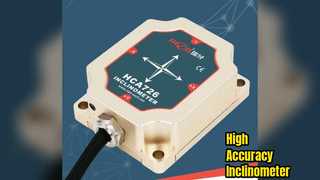
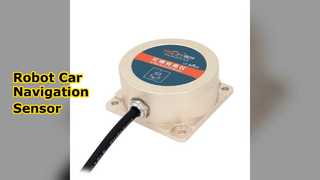
SDA126T Inclinometer: Precise AGV Level Sensor

DYNAMIC INCLINOMETER
December 25, 2025
Category Connection: Dynamic Inclinometer
Brief: In this walkthrough, we highlight key design ideas and how they translate to performance. Discover the SDA126T Inclinometer, a MEMS level sensor for AGV cars, featuring dual-mode algorithms for precise tilt measurement in both static and dynamic conditions. See how its industrial-grade design ensures reliable operation in harsh environments.
Related Product Features:
  • Features dynamic and static dual-mode algorithms for high-precision tilt measurement in various working conditions.
  • Offers a wide measuring range from ±1° to ±90° with a high resolution of 0.01°.
  • Utilizes MODBUS output via RS485 differential bus with a built-in 16-bit A/D converter.
  • Operates on a DC 9-36V power supply with a working temperature range of -40°C to +85°C.
  • Provides robust protection with an IP67 rating and anti-vibration capability exceeding 2000g.
  • Ensures consistent accuracy with integrated temperature sensor for drift correction.
  • Delivers fast response with a standard output frequency of 18Hz and customizable higher rates.
  • Compact size of 72.62×42×23.1mm with direct lead wire for easy installation.
FAQs:
  • What is the measuring range of the SDA126T inclinometer?
    The SDA126T offers a wide measuring range from ±1° to ±90°, with specific models like ±10°, ±30°, and ±60° available for various applications.
  • How does the sensor perform in both static and dynamic conditions?
    It automatically switches between static and dynamic algorithms, providing 0.05° static accuracy and 0.3° dynamic accuracy at 25°C for reliable measurements in all environments.
  • What are the environmental specifications for the SDA126T?
    It operates in temperatures from -40°C to +85°C, features IP67 protection against dust and water, and withstands vibration over 2000g, making it suitable for harsh industrial settings.
  • What output options and communication protocols are supported?
    The sensor uses MODBUS output via an RS485 differential bus, with a standard response frequency of 18Hz and options for higher customizable frequencies.