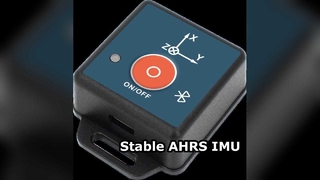
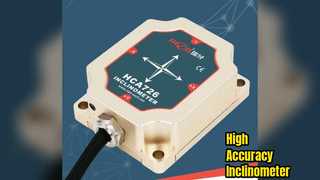
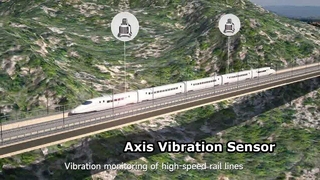
Brief: This video demonstrates the setup, operation, and key moments during typical use of the TL740D Gyroscope Sensor for Robot Cars. You will see how this MEMS sensor provides precise relative heading orientation and attitude control for AGVs and robot vehicles, eliminating the need for magnetic strips and showcasing its robust IP67-rated performance in real-world applications.
Related Product Features:
Provides precise relative heading angle measurement with a range of ±180° for accurate robot car navigation.
Features strong vibration resistance and can withstand 10grms vibration from 10-1000Hz for reliable operation.
Offers a compact and lightweight design, weighing ≤170g including the cable, for easy integration.
Delivers long operational life with an MTBF of ≥98000 hours and a working life of 10 years.
Cost-effective solution that replaces traditional magnetic stripe guidance, reducing installation complexity.
All-solid-state construction ensures high stability and reliability in harsh industrial environments.
Supports multiple output signals including RS232, RS485, and TTL with configurable output rates up to 100Hz.
Rated IP67 for protection against dust and water immersion, suitable for demanding applications.
FAQs:
What is the primary application of the TL740D gyroscope sensor?
The TL740D is specially designed for robot cars and AGV vehicles, providing relative heading orientation and attitude control to enable automatic tracing and driving without the need for magnetic strips.
What level of environmental protection does the TL740D sensor offer?
The sensor is rated IP67, meaning it is fully protected against dust and can withstand temporary immersion in water, making it suitable for harsh industrial environments.
What output signals and data rates are supported by the TL740D?
The TL740D supports RS232, RS485, and TTL output signals, with configurable output rates of 5Hz, 15Hz, 25Hz, 50Hz, or 100Hz to suit various application requirements.
How accurate is the heading measurement provided by this sensor?
It offers a resolution of 0.01° and a positional accuracy of less than 2mm per meter when converted from its angle accuracy, ensuring precise navigation for automated vehicles.